Showing posts with label laws and regulations. Show all posts

Thursday, August 26, 2010

What you need to know about copying or editing someone else’s music

You might find yourself editing music and wondering, am I allowed to do this? Whether you’re making your own music mashup with the MixPad multi-track mixer, adding a soundtrack to your home videos with VideoPad video editor, or making a new ringtone for your phone with WavePad audio editor, there are some rules you need to know about your music, and how you’re allowed to use it.

What’s mine isn’t yours and what’s yours isn’t mine
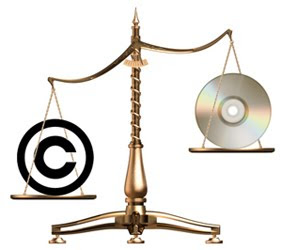
What you need to know about copying or editing someone else’s musicThat is the legal stance as far as copying or editing someone else’s music is concerned. With the increased popularity of the MP3 music format in the late 1990s, the sharing of copy written music without authorization became much more prevalent, causing an increase in concerns about copyright infringement. Today, copyright infringement isn’t something to take lightly. If you’re caught copying or editing someone else’s work you may be forced to pay heavy fines. Just ask former Boston University student Joel Tenenbaum - he had to pay $675,000 in fines for illegally downloading music.

Copying Music
According to The Copyright Act of 1976, you are allowed to copy someone else’s work if it falls under fair use. Fair use is described as using limited portions of a work, including quotes, comments, criticism, news reporting, and scholarly reports.

Editing Music
Since it is legal to create software to edit music, shouldn’t editing music be legal? There is a lot of talk about reselling and downloading copyrighted music, but not too much about edited music. The most important thing to know is you can edit music as long as you do not intend to use it for commercial use. Also, once you purchase music you inherit the rights to share that music with your friends, and you are also allowed to edit that music as long as you keep a copy of the original.

For more information see the following articles:
Using Edited Music on YouTube
For quite some time now, posting copyrighted or edited music to original videos on YouTube has been a problem. However, as of June anyone who wishes to put music behind their videos can, you just have to follow these simple rules. First, it is important to know that YouTube has signed a deal with Rumblefish, allowing users access to a library of music. Therefore, if you use music from this library you can edit it any way you like without worrying about YouTube removing your video. All you have to do is purchase the song for $1.99 and you will have a lifetime license to use and edit that song on YouTube.

Basic things to remember
  1. Always purchase music legally either at a music store or online
  2. If it’s not your original music, using it may be violating someone’s copyright
  3. If you aren't sure something is copy written, check with the US Copyright Office
  4. Selling or redistributing music without the copyright owners permission is a violation of the owner's rights
  5. If you edit or mix song you’ve purchased, you have to keep a copy of the original song
  6. Only the owner of copy written work has the right to prepare or authorize someone else to create a new version of that work
  7. When using someone else’s work, even just a portion of it for a video or any other project, it is always a good idea to credit the original artist(s)

Thursday, May 13, 2010

International Call Recording Laws and Regulations

Last week we looked at Call Recording Laws in the US at both the Federal and State levels. Similar to how laws vary from state-to-state in the US, telephone recording regulations vary from country to country, and when you're recording an international call you need to be cognizant of the regulations of all the countries involved in the call.

call recording softwareBecause many countries do not have specific laws covering telecommunications, or their laws are so vague they regulate on a case-by-case basis, your first course of action should be to check with your local government’s telecommunications authority. Local government agencies will be familiar with the various international telephone recording regulations. A great resource for Americans is the Reporters Committee for Freedom of the Press (RCFP) website, where there is a state-by-state listing of relevant local authorities. Outside the US, the consulate in any country is a good place to start; you should be able to find their contact information online. Be advised that calling these local authorities is important. It is not enough to do research online, there are simply too many variations and details.

Examples of international call recording laws:

Canadian one-party notification for call recording
Similar to a majority of U.S. states, Canada requires "one-party notification." This means you can record any phone call you participate in, even if you don’t inform the other caller.

British call recording notification law
The United Kingdom mostly requires single-party notification. However, the laws in the UK are somewhat vague. One of their missions is to protect employees by requiring non-recorded telephones in the workplace. So there’s little guidance for, say, an entrepreneur who works at home alone but makes sales calls they want to record. In such cases, it is advisable to check with a local attorney before recording any calls.

Australian call recording notification law
Australia’s applicable law, The Telecommunications (Interception) Act of 1979, states that whoever is being recorded must be informed. And this goes beyond mere phone calls to include any communication, including: "a conversation, a message, any excerpt of a conversation or message, whether in the form of speech, music or other sounds, data, text, visual images, signals or in any other form or combination of forms." Australia’s laws are extensive, so it’s worth taking a look at the guidelines available through the Australian Communications Authority (ACA).

Whether you want to set up a call recording system for quality assurance, compliance or any other reason, no matter what country you are in it is important to check your local laws, and the laws of other countries you will be recording. Particularly when laws are vague or have exceptions for businesses, you should get in touch with a lawyer or government official to make sure that your call recording plans won't be in violation of any laws.

Monday, May 3, 2010

Call Recording: A Great Tool As Long as You Know the Law

From medicine and law, to journalism or sales, voice records are kept for a variety of professions, making call recording software more and more popular. Any time when you need the voice equivalent of a paper trail—documentation that someone takes responsibility for saying something official—call recording can get the job done. Call recording can also be great for keeping minutes of conference calls.

telephone call recordingBut there are very serious laws governing call recording. So before you start recording, here is a quick introduction to the legal issues surrounding call recording:

First, US Federal law does allow recording of phone calls and other electronic communications with the consent of at least one party on the call. This means you can record any phone call you participate in, even if you don’t inform the other caller. At the State level, it gets a little trickier; some states have added another layer of requirements on top of the Federal law, insisting that all parties know when a conversation is being recorded.

It is important to note that when you record a conversation, you are subject to the laws of both the state you are physically located in, and the state(s) of the other people you’re calling. For example: California prohibits recording calls from other states unless the Californians being recorded have been told. So even if you are in New York, you are subject to California law if you record calls made to a Californian.

This is the reason why most American customer service departments begin their calls with a recording that says: “This call may be recorded for quality assurance purposes.” They say quality assurance, but they’re also keeping themselves in compliance with the recording laws of all states.

So how do you know what the law is near you? Thirty eight states and the District of Columbia permit individuals to record conversations they are having without informing the other parties, according to The Reporters Committee for Freedom of the Press (RCFP), a DC-based non-profit organization that offers free legal assistance to journalists. These laws are referred to as “one-party consent” statutes, and as long as you are one of the people having the conversation that’s being recorded, it is legal.

There are 12 states that require, under most circumstances, the consent of all parties to a conversation. Those states include: California, Connecticut, Florida, Illinois, Maryland, Massachusetts, Michigan, Montana, Nevada, New Hampshire, Pennsylvania and Washington. Warning: Sometimes these laws are inaccurately called “two-party consent” laws but all parties must consent to the recording in these states even if there are more than two.

One law that applies in all states: It is almost always illegal to record a conversation that you a) are not participating in and/or do not have consent to record, and b) could not naturally overhear.

The RCFP has a complete state-by-state guide of all call recording laws. Once you have done your due diligence and checked the call recording laws in your area, you can start enjoying the benefits of call recording software, and still sleep easy at night.

For International Regulations regarding call recording, look for a follow-up post on International Call Recording.

Tuesday, September 1, 2009

FTC bans robocalls and unsolicited automated telemarketing phone calls

robocall Have you heard that starting today the Federal Trade Commission (FTC) has put a ban on robocalls made by telemarketers? Telemarketers will now need written permission from the customer in order to practice this type of phone solicitation. Any telemarketer in violation of this new policy will face up to $16,000 in penalty charges per phone call.

NCH is excited at the thought of not having our day interrupted by robocalls. In fact, the chairman of the FTC, Jon Leibowitz, said, "American consumers have made it crystal clear that few things annoy them more than the billions of commercial telemarketing robocalls they receive every year."

Of course, there are exceptions to every rule. Calls that deliver information, as opposed to selling something, will not be affected by this ban. So things like automatic reminders about appointments or something like a bad weather delay or cancellation can still be made with an automated system.

As a company that offers a software product that can perform robocalls, we worried at first about our sales. What would be the impact the ban on robocalls would have on our IVM Answering Attendant? While we realize some sales may be lost, we have a great deal of confidence in IVM as more than a just robocall-software product. The list of features and benefits IVM provides extends way beyond automated outbound calling, including:

  • Call attendant - use as a automated attendant to facilitate directing and transferring incoming calls.
  • Connect to telephone line(s) using a professional telephony board, voice modem, directly to a VoIP service, or to a PBX like Axon Virtual PBX.
  • Corporate voice mail solution for anywhere from a single line answering message to hundreds of voice mailboxes. Recorded messages can be played at any time, forwarded to an email address, or accessed remotely.
  • Interactive Voice Response system design your own advanced IVR system for anything from an information line to a phone-in customer survey. The possibilities are endless.
  • Call Logging - all calls are logged with the date, time and caller ID information.

So no more, “Congratulations, you’ve just won a free vacation,” or “Would you be interested in trying new car insurance.” We could not be happier that these pesky messages we did not sign up for will no longer be interrupting our daily life, but why not explore the other possibilities IVM Auto Attendant software can offer your business?