Showing posts with label phone system. Show all posts

Thursday, July 14, 2011

Telephony Software at NCH

Axon Windows PBX and other NCH Telephony SoftwareHi! My name is Dustin and I am the new lead developer for NCH Software’s Telephony products. Previously, I’ve been working on our company’s Utility products such as FileFort backup software, Verity child monitoring software and Orion file recovery software. I am excited about this new opportunity and I hope I can make our Telephony products even better!

One new feature coming soon to our Axon virtual PBX is the ability to access your web interface from any internet connection without the need for complicated router configuration. This is accomplished by connecting to an NCH Software server using a simple internet address like http://sampleaddress.users.nchuser.com which relays to your Axon server. Pages can even be viewed over a secure (HTTPS) connection to guarantee that transmitted information is safe. This feature is ad supported so there is no extra cost to you. You will still be able to view the web interface without ads the same way you always have but with this feature we hope Axon will be even easier to use remotely.

So be on the lookout for this new feature in Axon and more feature and usability improvements to come to our telephony software:

Monday, May 2, 2011

Axon Windows PBX Tutorial

Putting together a phone system can be a daunting task. When you need to figure out phone lines and extensions, plus extras like on-hold music, things can quickly spiral out of control, especially if aren't well versed in Linux—which many PBX systems require. Fortunately, there is another option. With Axon, a Windows PBX system, as with all of our telephony software, we have done our best to keep everything simple and straight forward. Plus we have just finished a new quick start video tutorial to further guide you through the process of setting up your new PBX telephone system.


So if you are looking for a way to manage telephone calls and extensions across your business, and you don't have an IT team to do the grunt work for you, take a look at Axon virtual Windows-based PBX software. It will make getting your phones up and running as painless as possible, and you don't even need to learn a new operating system.

Wednesday, March 30, 2011

Home Business: Phone System Enhancements

Software for Getting Your Home Office Running (Part 4 of 5)

Give your business a professional sound with simple phone system enhancementsYou’re home office is coming along very well. You have your accounting system and VoIP phone number. Now it's time to think about the additional features you might need to complete your phone system and give your business a professional sound. For example, you can add a voicemail system to answer calls for you, or maybe an on-hold message player for that added level of credibility if you need to put someone on hold while you look something up or take another call.

Those extra audio queues really can help you sound like a larger more professional organization right out of the gate. When callers are on hold, even for just 30 seconds, it is a perfect opportunity to make an impression, create interest, and strengthen your brand image. Every entrepreneur can appreciate the importance of building their brand and strengthening business relationships. IMS telephone on hold software lets you easily play those custom messages to anyone who is put on hold.

There’s only one piece of software you need to put it all together. IVM Voicemail Software can be used to create a custom answering solution, and will work with your standard telephone lines, VoIP services, or both. You can use IVM to play a menu to callers, redirect incoming calls outside of office hours, or as an answer machine. Recorded messages can be played at any time, forwarded to an email address, or accessed remotely. Even if you are on the road you can still easily access your messages, making it easier to stay in touch with all your business contacts.

IVM not only handles voicemail but can also be used as a more sophisticated automated attendant and interactive voice response system (IVR). This means it will easily grow with your small business by providing an answering machine today, and help you direct and transfer calls through a larger PBX phone system when you have several employees tomorrow.

Friday, March 25, 2011

Home Business: VoIP Phone System

VoIP softphone, perfect for business telephone callsSoftware for Getting Your Home Office Running
(Part 3 of 5)


Another key component to setting up your home office, after your accounting system is in place, is the phone system. You've likely heard about VoIP, which has been growing in popularity, and with good cause. As an entrepreneur the important thing to know is that VoIP can save you a lot of money on phone bills.

VoIP stands for Voice over Internet Protocol, and what that means is that the call information travels over the Internet instead of through traditional telephone landlines. Essentially, the only cost for sending information over the Internet is the Internet connection; the transmission itself costs nothing. That means calls between VoIP users will frequently be free.

The only cost associated with VoIP calls come from connecting to other telephone networks that service cell phones and landlines. Even in this case, there are significant cost savings because the VoIP phone providers can use the Internet to travel long distance, and then switch the call to a standard phone line in the local area of the destination, and you pay only for the local call, eliminating long-distance charges. The benefit to this is that you can increase the reach of your business, because you won’t be worried about your long-distance phone call budget.You business can potentially be more functional—providing new opportunities to increase your productivity and responsiveness.

With that in mind, here’s an example of the cost savings. For your home office, the telephone line and long-distance charges using a traditional landline phone system can cost upward of $100 per month. Compare that to the cost of using a VoIP system, where the total cost can be as low as $3.25 to $4.30 per month, a savings of more than 90%! With those savings, the initial cost of a business-oriented softphone will be paid for in less than a month.

A VoIP phone, or softphone like the Express Talk softphone only takes a few minutes to set up and will work with any VoIP provider. Express Talk is designed for professionals and has all the features you expect from a business telephone including do not disturb, conference calling, and even the ability to record conversations. It can be used with a USB phone to give the feel of a traditional phone, or with a headset, or microphone and speaker setup—which you may already have—making the cost of setting up your office with VoIP only a matter of buying the software.

Next: Phone System Enhancements

Wednesday, August 18, 2010

IVR at the Museum

cell phone tour sign at the Smithsonian museumThis summer my dad and I both took some vacation time to go see my sister as a sort of mini family reunion. One of the things that we did on the trip was drive down from her place to Washington D.C. to see the sights. We went to about as much of the Smithsonian as you can fit in with only a few days of time, and while I was reading about all of the different exhibits, there was one thing I saw that stood out: cell phone audio tours.

Quite a few exhibits had signs or placards up with a phone number and "extension" that you could call from your cell phone to listen to more information about that particular display. We saw these signs everywhere from inside the different Smithsonian buildings to the National Botanic Garden. With my nerdy side shining through, I couldn't help but think, "What a wonderful application for an interactive voice response system!" Everyone these days carries a cell phone with them, and these call-in numbers give anyone who is interested the opportunity to hear more about the displays that interest them straight from the source, whether it is a recording made by the artist or the curator or gardener.

cell phone call to learn more sign at the national botanic garden
What IVR is and its Applications
Interactive voice response (IVR) has a way of sounding very complicated, and that is largely because it is such a powerful and dynamic technology that the possibilities alone can be a bit daunting. It is a little bit easier to grasp if we break it down to some of the unique applications that IVR can be used for. In this case, the museum is in essence putting together an information line. Visitors call the information line, input the number displayed for their current location, and the appropriate audio is played back to them. In other cases, it can be used as an answering attendant to direct incoming phone calls to different extensions, collecting data in an automated telephone survey, or a variety of other tasks.

So while part of me hates to admit that work followed me on my vacation in the form of IVM interactive voice response software, another part of me really got a kick out of seeing this great application for an IVR system at the museum. It's something to keep in mind if you are looking for a solution to help you share information or your expertise without having to always be available in person.

Monday, August 16, 2010

VoIP and Telephony Roundup

VoIP software blog posts Since NCH is a leader in telephony and VoIP software, we want to give you as much information about these topics as possible in one place. Whether you are Wondering if Your Phone Got Left Behind in the Digital Transition, or if you are working on putting together a complete phone system for your home or office, here are some articles we have compiled over the last few months that will help you along the way:
For more information about our different telephony software products that you can use to create a custom phone system solution, go to: www.nch.com.au/phone/index.html

Thursday, June 17, 2010

Speech Commands in IVR Telephone Systems

interactive voice response speech commands In the most recent version of IVM interactive voice response software, v5.03 added a new speech recognition feature that allows the automated system to accept speech commands in addition to key presses as responses. This gives callers added flexibility when navigating an IVR system.

IVM is a powerful interactive phone system perfect for a variety of tasks from setting up an information hotline to a voicemail system or automated attendant. We hope that users will find this new option a convenient feature in designing useful and user-friendly call flow patterns for their interactive telephone systems.

Read more about best practices in designing an interactive voice response system.

Thursday, May 6, 2010

How VoIP Works

VoIP stands for Voice over Internet Protocol, indicating the ability to carry vocals over the internet. Many businesses and homes are switching to VoIP softphones because the price is significantly lower. These lower costs are great, and just knowing that VoIP really can help you save might be enough, but for those inquiring minds out there here is brief introduction to how VoIP works.

VoIP internet telephoneVoIP technology takes advantage of existing data networks to transfer calls letting the Internet do most or all of the work. So by paying for your Internet connection you are already paying for the networking capabilities needed to have a VoIP telephone call. This means that many providers will offer completely free phone calls for calls made from one VoIP caller to another, or PC-to-PC calls, because they are handled entirely "on-line." When you want to call someone on a land-line phone, SIP gateway providers can connect you to a local phone service. The SIP provider uses the web to get your phone call as close to the other caller as possible before connecting to a standard phone line. This virtually eliminates long-distance charges altogether, which is why the rates are so much lower.

Advantages of VoIP
  • VoIP is very scalable, letting you transmit more than one telephone call on the same broadband-connected telephone line, making it easy to add extra telephone lines
  • Because VoIP is location independent, you can take your VoIP phone with you wherever you go, provided you are connected to the Internet
  • VoIP reduces the need for dedicated phone wiring and some of the expensive hardware needed for a complete traditional telephony system
Tip: When choosing a provider, it is usually better to pick one who offers service specifically in your area. If you are calling a particular country a significant amount, choosing a provider from that country can potentially further reduce your costs further.

To learn more about the technical side of VoIP you might to check out the VoIP Demystified Video where the good people at HowStuffWorks.com give some more details about how VoIP works and voice information is transferred.

Friday, April 2, 2010

Adding Voicemail to VoIP to Help Put You in Business

add voicemail to voip Recently, we talked about the cost savings VoIP can provide to small-business owners and entrepreneurs. But to make the switch to VoIP as seamless as possible requires figuring out how to manage all your telephony needs. One of the most relied-upon pieces of any business phone system is voicemail, and our interactive voice response software, IVM, will make sure you have all your bases covered.

IVM Voicemail Software can be used to create a custom answering solution for everything from a single-user solution to a multi-line corporate system with thousands of voicemail boxes. Create as many voicemail boxes as you need with the option to check voice messages through an internet access page, by remote call-in access, or have messages sent to an email address as an audio attachment.

And it doesn’t matter whether you have standard landline telephone lines, use a VoIP phone service, or want something that will combine the two—IVM can be configured for a variety of setups.

IVM also includes some impressive features that are sure to add an extra layer of professionalism to your business phone system. For example, the Auto Hours setting in IVM allows you to set different “answering behaviors” based on the time of the incoming call. This can be used to play an off-hours message to customers calling outside of your normal business hours. You can even set up more complex interactive voice response systems, turning your phone line into an information line for customers to find answers to frequently asked questions at the press of the button.

Getting Started with IVM Voicemail Software
While IVM can be connected to your traditional landline with the use of a voice modem or telephony board to manage voicemail for your current phone system, switching to VoIP can further your cost saving, because there is no additional hardware required to connect a VoIP telephone line with IVM or a Virtual PBX.

IVM is a very powerful telephony tool and I could go on all day about the features and benefits of using IVM, but the easiest proof is in the product. IVM comes with a free 14-day trial, and will work on any PC, giving you time to interface with the application and see how it can improve your phone system and boost your business potential.

Saturday, March 20, 2010

How VoIP Can Help You Save

How VoIP Can Help You Save At this point, everyone knows someone who is using VoIP instead of a regular phone line. But for those without any experience with VoIP, the idea of switching over can seem like a daunting and risky task despite all the companies and users out there touting the benefits. VoIP has a negative stigma to overcome—during its early use calls weren’t always reliable and the quality was often poor. But the technology is constantly improving, and it has become a viable option for companies looking for innovative ways to save.

Not only will VoIP save you money, but using it can potentially make your business more functional—giving you new opportunities to increase your productivity and responsiveness. While actual cost savings will vary, with a reliable softphone like Express Talk, the savings for small businesses can be significant.

Cost Savings
Here’s an example: say a small business has six employees at one location, and several more employees working remotely. For the main office, the telephone line and long distance charges using a traditional PSTN landline phone system could cost about $180 per month, according to some Verizon statistics. Add to that the cost of the additional phone lines for the “virtual” employees not onsite. Regular phone lines for these freelancers usually run from $39.99 to $100 per month, plus taxes, making the monthly phone bill for this business as high as $780 per month.

Compare that to the cost of using a multi-line VoIP system, where the total cost can be as low as $3.25 to $4.30 per-month, a savings of more than 90%! At those prices, the switch to VoIP can pay for itself very quickly.

Functionality Boost
Another one of VoIP's biggest benefits is arguably increased functionality. The Yankee Group estimates that small to mid-sized companies who use VoIP systems are 25% to 35% more responsive to customers.

This increase is attributed to the convergence of voice and data, giving users one centralized system for managing messages sent by phone, fax, email, and cell phones. Reducing the number of channels that need to be handled separately makes checking and responding to messages a more efficient process, so more messages can be answered.

Learn More About VoIP
This is just the beginning. There is a lot more information about VoIP, and if you want to learn more here are several online resources you might want to check out:

Monday, March 15, 2010

Interactive Voice Response Best Practices & Design Tips

Interactive Voice Response Best Practices We've all been stuck on the phone trying to get information from an automated phone system in a battle against the machine that can seem to be designed specifically to prevent us from finding what we're looking for. While that almost certainly wasn't the intent of the automated phone system, poor execution can leave a multitude of customers with a bad taste in their mouth.

A well designed IVR (Interactive Voice Response) system can be a valuable resource, but a poorly designed one will only reflect poorly on your company’s customer service. With that being said, here are a few pointers to help make sure you are designing a good call flow for your automated IVR system:

  • Outline the Call Flow for Your IVR
    A flow chart or an outline is the perfect place to start. You really need to take the time to plan out how someone is going to interact with your phone system long before you start creating the actual IVR in your software. Taking the time to plan it all through at the beginning will help you keep the big picture in mind and to avoid creating a long trail of prompts.

  • Think Like Your Customers
    Always keep your customers in mind. Why will they be calling the system? Put the options for the most frequently used items at the beginning so they can be accessed quickly and easily. At every step along the way think about how the message will come across from a customer's point of view.

  • Keep It Simple
    Don't try to do everything. Less is more. With an automated phone system you want to keep the number of key presses to minimum. Trying to do too many things just gives the callers more places that they can get lost along the way. Really think about what options should be available and who is calling in. For example, if you need to offer different services to customers and vendors it might be better to have two different systems rather thane on that does everything, keeping each line simplified and tailored to its purpose instead of trying to do everything on one line.

  • Keep Menu Prompts Clear and Concise
    The longer your message, the harder it is going to be for a caller to remember everything that is being said and what they need to do to interact with the system. Be sure to use the same language as your customers, avoiding industry slang and terminology callers might not be familiar with.

  • Offer Universal Commands
    Options like pressing the star key (*) to return to the main menu at any point during a call, or an option to repeat a prompt will make it much easier for callers to navigate the IVR system.

  • Give the Option to Talk to Someone or Leave a Voice Message
    The goal of an IVR system may be in part to reduce the number of calls that your staff needs to handle, but there will be times when the system does not fulfill a customer's needs. You need to offer these callers the alternative to either talk to a live person or leave a message for someone to call them back.

  • Test, Test, Test, and Test Some More
    Test the call flow every step along the way test the flow. Think of as many possible scenarios as you can and go through the process yourself. Get other people to try it out, too. Never think of your system as being completely done. You need to monitor how well it is working, and make sure that you are offering the right options at the right time. Get feedback from your staff and customers. Designing a good IVR call system should be an ongoing process.

These are just a few of the tips to help you get started on the right foot when you are implementing an interactive voice response system. Taking the time to thoroughly plan out a new IVR call flow, before you even start working with an application like IVM interactive voice response software, can make a significant difference in the final result and is well worth the time and effort.

Tuesday, March 2, 2010

Auto Dialer Software Gives Added Power to Small Businesses Reaching Out to Customers and Clients

auto dualer There is an abundance of reasons your organization might want to call lists of people—whether for service calls on accounts to make sure customer relations are in good standing, reaching out to members when it is time for them to renew, notifying clients of an important change, or to meet an important fund-raising goal.

Between email and the Internet, the number of opportunities an organization has to put themselves in touch with their customer base has increased over the years, and businesses and groups are learning the best ways to take advantage. Developments in these fields have become an important component to Customer Relationship Management, and in some cases have come to overshadow some of the more traditional channels of communication like the telephone. Yet the value in person-to-person contact is still important, and technological progressions in phone system management are helping to keep phone calls an economical option for staying in contact with customers.

The new Axon Agent auto dialer is an add-on feature for our virtual PBX that makes it easier for everyone from call centers to charities to reach out to their customers, members or constituents. No matter the reason your organization has for placing calls, the longer the list of contacts gets the harder it is to manage the process. That is where an automated dialing system can really come in handy.

One of the wonderful things about NCH's virtual PBX, Axon, is that it is Windows based software, making it easy and accessible to small businesses that don't have the luxury of a full time IT staff to help configure and manage a more complex Linux phone system. The new auto dialer agent gives these smaller organizations another useful and powerful feature, making it easy and efficient to place phone calls to a list of people and to compete with their larger counterparts.

With the Axon Virtual PBX you can log-on to the weblet to set up not only lines and extensions for your phone system, but also to set up calling agents and outbound calling campaigns containing your list of contacts and a script for the agents to use when placing the phone calls. Agents can then log-in using Axon Agent and join a calling campaign. Axon does all the work of managing the campaign list and dialing for the agents, making sure that no duplicate calls are made and ensuring an efficient calling process.

Axon is just one of the telephony software applications offered by NCH, allowing any business to customize a solution for their unique needs. For another example, see automated outbound calling software for additional calling options that don't require operators to handle individual phone calls.

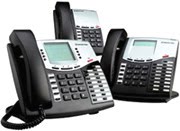
Monday, February 15, 2010

Switching to VoIP Helps Companies Save

Businesses Save by Switching to VoIP
In this economy, companies of all sizes are finding they need to tighten the purse strings and save as much money as possible. AdminCorp Limited is one company that has seen significant cost saving benefits from switching to VoIP.

As a business administration outsourcing specialist, AdminCorp manages accounts ranging from small to medium corporations throughout New Zealand. They used to have a hardware setup that was eating into resources between technician and telephone line provider fees. Last year, in order to keep up with technology and find a more cost effective solution, AdminCorp made the leap and switched to a Voice over IP solution.

AdminCorp was already familiar with NCH Software, having used Express Scribe, NCH’s free transcription application, for years. Because of this familiarity, AdminCorp chose to use another NCH Software program, Express Talk, to handle their VoIP phone calls. Express Talk is softphone that lets users make VoIP phone calls from their PC, Mac or Pocket PC mobile phone.

The switch to Express Talk has worked out well for AdminCorp, who saw their costs drop immediately. Recording calls they transcribe for clients has become a much easier task, and they can now transfer between different DID (direct inward dialing) phone numbers with ease. Additionally, they’ve benefitted from the added control they now have over their phone system. Previously they had to give direction to the telephone company, then wait around for the changes to be made. Now, without any outside tech support or service costs, they are able to update their system as needed.

See if Express Talk is the solution for your company. Between the free or low cost phone calls you can make with VoIP, the mobile softphone, video capabilities, professional and easy-to-use interface, and the full range of additional business features, you've got nothing to lose and everything to gain. Try Express Talk or any one of NCH's computer telephone software applications all with free 14-day trials available so you can make sure they will meet your needs.

Monday, September 21, 2009

How Telephone On-Hold Messaging Can Help Your Business

Most people calling in to your business have done business with you before, and they are showing an active interest in your organization. These are people you want to be talking to.

When callers are on hold, even for just 30 seconds, it is a perfect opportunity to make an impression, create interest, cross sell higher margin products or services, answer frequently asked questions, and strengthen your brand image.

The IMS Telephone On Hold Player is an easy way to create and manage an on hold messaging system, which can have a significant positive effect on your business. For example look at the following statistics from MOH productions about the use of on-hold messages:
  • A Message On Hold system can reduce caller hang-ups by almost 79%
  • Callers will wait up to 25% longer when listening to Messages On Hold
  • Of the callers who hang up when on-hold, 34% will not call back
  • In one study, 88% of callers preferred Messages On Hold to other options
  • 16-20% of callers have made a purchase based on an offer they heard while on-hold
IMS On Hold Messages and Music Server “Callers presented with On Hold Messaging versus silence or radio commercials are more likely exhibit interest in the product advertised, more likely to retain information and be less agitated.” - Jefferson Denneandrus Research Firm Statistics from A&T and the On-Hold Messaging Association show that callers stay on the line up to 25% longer when provided with On Hold Messaging versus "dead air" or "background music," and up to 17% longer than radio. The IMS On Hold Messages and Music Player gives you complete control over the scheduling of your messages from specifying active date ranges to the times of day a message should be active. IMS Telephone On Hold Player runs on Mac or Windows PCs and can be connected to either Virtual VoIP PBX systems or traditional analog PBX units from your computer's audio output with out any extra hardware, making IMS the perfect solution for small businesses.

Monday, July 20, 2009

Did Your Phone System Get Left Behind in the Digital Transition?

Digital VoIP Phone Everything today is going digital. The recent transition to digital television in the United States is just one more example of this continuing digital revolution. But what about your phone? Are you still using analog landline telephones or have you already made the switch to VoIP?

VoIP or Voice Over Internet Protocol is become the digital wave of the telephone future. By taking advantage of the internet to send telephone voice information it is possible to drastically reduce your phone bills, especially for long distance calls.

Another benefit to VoIP is that it makes using telephony software like Axon virtual PBX and IVM Auto Attendant even easier. Products like these are much less expensive and easier to upgrade, scale, and maintain than their traditional hardware counterparts.

Of course these products aren't limited to using only VoIP telephone lines, so you still have the ability to connect and control your regular PSTN lines or a combination of VoIP and analog phone lines from your PC when design the best phone system for your home or office.

Take a look at the complete range of telephony products from NCH Software at www.nch.com.au/phone/index.html